
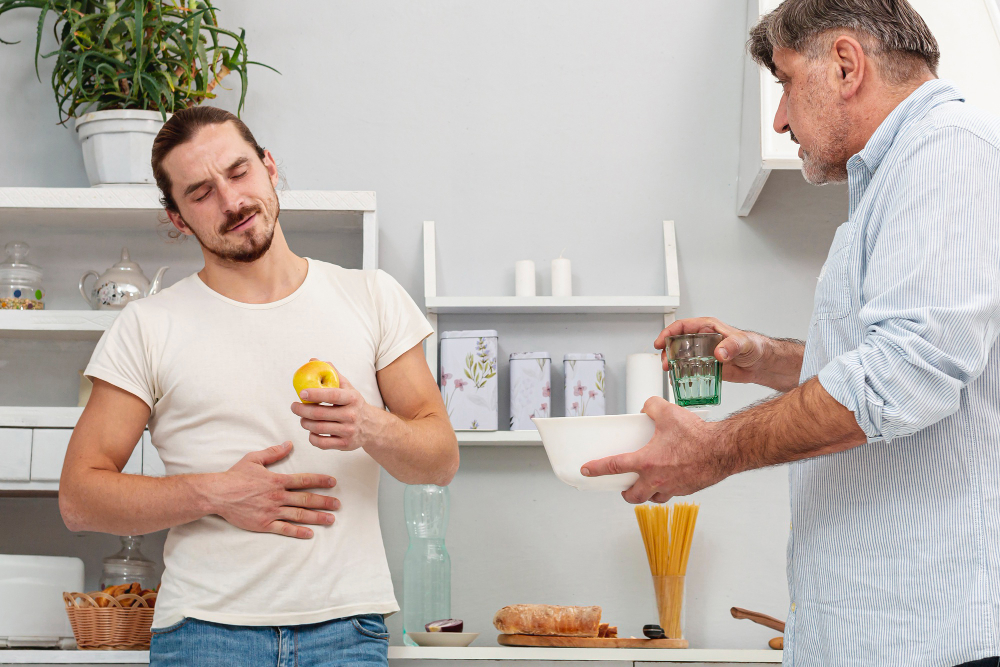
What Is Digestive Pain After Meals?
Digestive pain after meals is a common problem. It means you feel pain or discomfort in your stomach or belly after eating. Sometimes, this pain is mild and goes away quickly. However, there are times when it lasts longer or keeps coming back. Many people think acid reflux is the only cause. But, digestive pain after meals can be a sign of other health issues. Knowing the difference is important for your health.
Common Causes Beyond Acid Reflux
While acid reflux is a frequent cause, other problems can also lead to persistent stomach pain after eating. For example, some conditions affect how your stomach and intestines work. Others may involve food allergies or infections. Here are some common causes of digestive discomfort beyond acid reflux:
Because these causes are different, treatment for post-meal pain depends on the reason.
Symptoms to Watch For
Not all digestive pain is the same. Some signs may point to a more serious problem. Therefore, it is important to notice your symptoms. Watch for these warning signs:
If you notice these symptoms, you should seek medical help soon.
How Doctors Diagnose Digestive Pain
Doctors use several steps to find the cause of digestive pain after meals. First, they ask about your symptoms and medical history. Next, they may do a physical exam. Sometimes, they order tests to get more information. These tests can include:
With these steps, doctors can find the cause and suggest the right treatment for post-meal pain.
Treatment Options and Lifestyle Tips
Treatment for digestive pain after meals depends on the cause. Sometimes, simple changes can help. Other times, you may need medicine or other care. Here are some common treatment options and tips:
For some people, treating the main problem, like an ulcer or infection, will stop the pain. Always follow your doctor’s advice for the best results.
When to See a Doctor
Sometimes, digestive pain after meals is mild and goes away on its own. However, you should see a doctor if:
Early care can help prevent serious problems. Do not wait if you are worried about your health.
Prevention Strategies
While you cannot prevent all causes of digestive pain, you can lower your risk. Try these tips to keep your stomach healthy:
With these steps, you may reduce your chances of digestive discomfort after eating.
If you experience ongoing digestive pain after meals, consult a general physician for personalized advice. Early care can make a big difference in your health.